Queer Places:
357 Garland St W, West Salem, WI 54669
Neshonoc Cemetery, N5514 WI-108, West Salem, WI 54669, United States
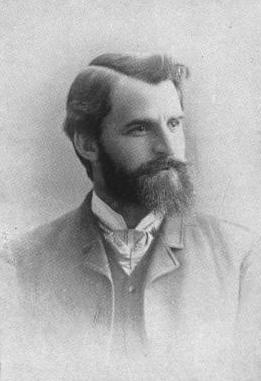 Hannibal Hamlin Garland (September 14, 1860 – March 4, 1940) was born on September 14, 1860, on a farm near West Salem, Wisconsin, the son of Richard Garland and Charlotte
Isabelle McClintock. As a child, his family moved frequently across the Midwestern frontier, living through the grueling realities of agricultural life on the prairies of
Iowa and the Dakota Territory. Despite the financial hardships of his youth, Garland graduated from the Cedar Valley Seminary in Osage, Iowa, in 1881. After briefly teaching
school, he moved to Boston in 1884 to pursue a literary career. Living in near-poverty, he spent his days reading voraciously in the Boston Public Library, where he absorbed
the social philosophies of Henry George and Herbert Spencer. These thinkers deeply influenced his perspective on agrarian reform and the socio-economic struggles of the
American farmer.
Hannibal Hamlin Garland (September 14, 1860 – March 4, 1940) was born on September 14, 1860, on a farm near West Salem, Wisconsin, the son of Richard Garland and Charlotte
Isabelle McClintock. As a child, his family moved frequently across the Midwestern frontier, living through the grueling realities of agricultural life on the prairies of
Iowa and the Dakota Territory. Despite the financial hardships of his youth, Garland graduated from the Cedar Valley Seminary in Osage, Iowa, in 1881. After briefly teaching
school, he moved to Boston in 1884 to pursue a literary career. Living in near-poverty, he spent his days reading voraciously in the Boston Public Library, where he absorbed
the social philosophies of Henry George and Herbert Spencer. These thinkers deeply influenced his perspective on agrarian reform and the socio-economic struggles of the
American farmer.
Garland first achieved widespread literary recognition with the 1891 publication of Main-Travelled Roads, a collection of raw, unromanticized short stories depicting the
harshness, isolation, and drudgery of Midwestern farm life. Championing a philosophy of literary realism he termed "veritism," Garland sought to capture true local color
while advocating for social reforms, women's rights, and populist politics. In 1893, he relocated to Chicago, positioning himself as a central figure in the burgeoning
Midwest literary and artistic renaissance. During his time in Chicago, he married Zulime Taft—the sister of renowned sculptor Lorado Taft—with whom he had two daughters,
Mary Isabel and Constance.
Garland's prominent role in Chicago's cultural milieu extended to fostering inclusive and dynamic creative circles. Alongside fellow novelist
Henry Blake Fuller, Garland helped cultivate "The Little Room," a celebrated mixed-gender social club that met on Friday
afternoons in the top-floor studios of the Fine Arts Building. Named after a short story by Madeleine Hughes McDowell, this progressive sanctuary brought together a diverse
community of painters, writers, and sculptors. Reflecting the complex social tapestry of turn-of-the-century artistic circles, the club's membership included numerous
prominent figures who were gay, such as the legendary commercial illustrators J.C. Leyendecker and
Frank Xavier Leyendecker, alongside other luminaries like Jane Addams,
George Ade, Harriet Monroe, and Lorado Taft. Through ventures like The Little Room, Garland
actively supported a vibrant, interdisciplinary vanguard that embraced diverse identities and modernist perspectives.
In the later stages of his career, Garland shifted away from gritty regional fiction toward historical biographies, memoirs, and romances of the American West. His
autobiographical "Middle Border" series culminated in A Daughter of the Middle Border, which earned him the Pulitzer Prize for Biography in 1922. Relocating to New York in
1916 and finally to Hollywood, California, in 1929, Garland spent his final decade dedicated heavily to the investigation and defense of psychic phenomena and spiritualism.
He passed away in Hollywood on March 4, 1940, at the age of seventy-nine, leaving behind a legacy as one of America's pioneering literary realists and a champion of regional
culture.
References:
- A Son of the Middle Border (New York: Macmillan, 1917)
- A Daughter of the Middle Border (New York: Macmillan, 1921) – Winner of the 1922 Pulitzer Prize for Biography
- Roadside Meetings (New York: Macmillan, 1930)
- Companions on the Trail (New York: Macmillan, 1931)
- My Friendly Contemporaries (New York: Macmillan, 1932)
- Afternoon Neighbors (New York: Macmillan, 1934)
- Newlin, Keith. Hamlin Garland: A Life. Lincoln: University of Nebraska Press, 2008. (Widely regarded as the most comprehensive and thorough modern biography of Garland).
- Holloway, Jean. Hamlin Garland: A Biography. Austin: University of Texas Press, 1960.
- Pizer, Donald. Hamlin Garland's Early Work and Career. Berkeley: University of California Press, 1960.
- McCullough, Joseph B. Hamlin Garland. Boston: Twayne Publishers, 1978.
- The Hamlin Garland Papers, Special Collections Department, University of Southern California (USC) Libraries – Houses roughly 10,000 letters, literary notebooks, and manuscripts documenting his life, social circles, and correspondence with prominent literary figures.
- The Huntington Library, San Marino, California – Holds extensive manuscript correspondence and personal diaries.
- Newlin, Keith, ed. Hamlin Garland: A Bibliography, with a Checklist of Unpublished Letters. Troy, N.Y.: Whitston Publishing, 1998.
Support this project
This website is a passion project researched, developed, and funded entirely by me. If you find the content valuable and would like to help support the ongoing research and hosting costs, any contribution is deeply appreciated.
Thank you for keeping this independent resource alive!
My books on Amazon: Elisa Rolle's books
BACK TO HOME PAGE